
How to Find a Roof Leak | Erie PA | EJ's
Roof leaks are master hiders. Learn the expert process for tracing water from your ceiling back to its entry point on the roof.
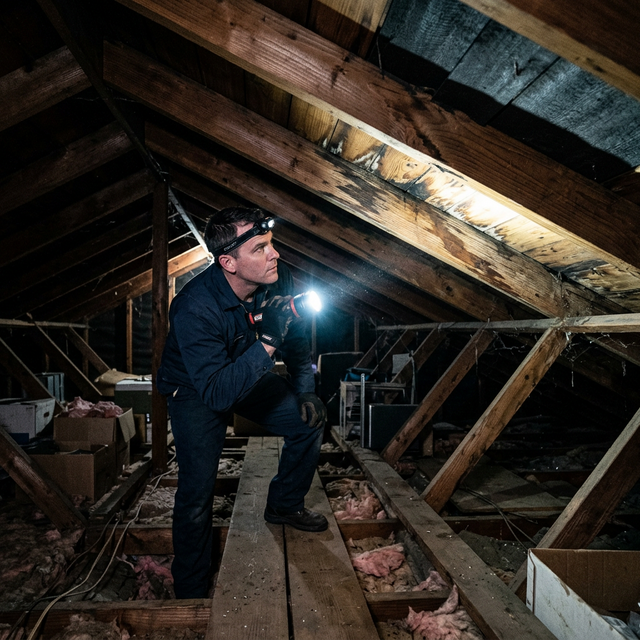
Roof leaks can cause serious damage if not detected early. Identifying the source quickly is the difference between a minor repair and a total home restoration. This guide shows you exactly how to track down the leak.
The Reality: In Erie, water often enters at an ice dam on the eaves but travels along the rafters for 10 feet before dripping onto your ceiling.
Step 1: Start Inside Your Home
Look for the 'warning signs' that indicate moisture has already breached the structure:
- Water stains or 'rings' on ceilings.
- Peeling or bubbling paint on interior walls.
- Musty, damp odors in specific rooms.
Step 2: The Attic Inspection
The attic is the 'evidence room' for roof leaks. Using a flashlight, look for:
- Compacted or damp insulation.
- Black streaks (mold) on the underside of the roof deck.
- Visible daylight shining through roof boards.
The Plumbing Rule
If the leak only appears when it's NOT raining, check your attic-mounted HVAC units or plumbing vents first. These are often mistaken for roof failures.
EJ's Roofing provides professional leak detection services, using local expertise to find the 'hidden' sources that common inspections miss.
Material_Longevity_Analysis_Erie
*Adjusted for Northwest PA freeze-thaw cycles and lake-effect wind loads.
Lake Effect Moisture
Constant dampness and heavy snow loads
Off-Lake Gale Winds
High-pressure gusts that lift shingles
Rapid Freeze-Thaw
Expanding ice that widens small cracks
Common Questions
Quick clarity on your roofing concerns.