How to Fix Tree Roof Damage | Erie PA | EJ's
Tree damage can range from minor shingle cracks to severe structural failure. Learn how to safely assess and repair your roof after a storm.
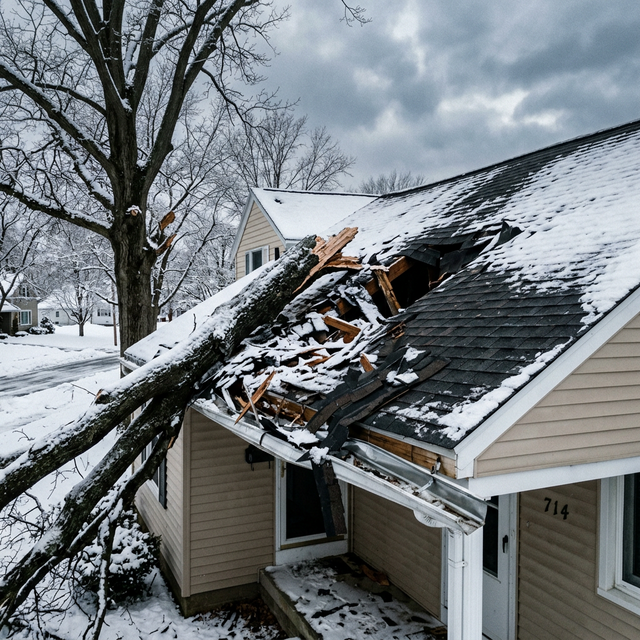
Trees can add beauty and shade to a property, but they can also pose a serious risk to your roof during Erie's intense windstorms or heavy snowfall. When branches break or entire trees fall, they can damage roofing materials and create openings that allow water to enter the home.
The Reality: For homeowners in Erie, Pennsylvania, roof damage from trees often occurs during winter storms when ice accumulation makes branches snap under massive weight.
1. Types of Tree Damage to a Roof
Roof damage caused by trees varies significantly depending on the size and force of the impact.
- Mild Damage: Dents or cracks in shingles, small punctures, and gutter accumulation.
- Moderate Damage: Broken shingles across larger sections, damaged flashing, or small holes in the roof deck.
- Severe Damage: Structural damage to roof framing, broken roof decking, and interior water intrusion.
Safety First
Never climb onto a roof after a tree impact until a professional has verified the structural integrity of the trusses. Hidden fractures can cause a collapse under the weight of a person.
2. Steps to Repair Tree Damage
The repair process depends on the severity of the impact. Professional contractors use a specific sequence to restore your home:
- Safe Inspection: Checking for visible signs of damage from the ground.
- Debris Removal: Carefully removing branches without causing additional shingle scrapes.
- Temporary Protection: Tarping the roof to prevent immediate water damage.
- Material Restoration: Replacing shingles, flashing, and decking.
At EJ's Roofing, we specialize in storm recovery. We ensure that not only the visible shingles are fixed, but the underlying structure remains strong enough to handle next winter's snow load.
Lake Effect Moisture
Constant dampness and heavy snow loads
Off-Lake Gale Winds
High-pressure gusts that lift shingles
Rapid Freeze-Thaw
Expanding ice that widens small cracks
Common Questions
Quick clarity on your roofing concerns.